
Venous Interventions
Home > Venous Interventions
Advanced Minimally Invasive Treatment for Venous Diseases
Advanced Minimally Invasive Treatment for Venous Diseases
Venous diseases are among the most underdiagnosed and undertreated conditions, yet they can significantly affect quality of life and, in some cases, become life-threatening. Conditions like deep vein thrombosis (DVT), chronic venous insufficiency, venous blockages, and post-thrombotic syndrome can cause persistent swelling, pain, skin changes, and ulcers in the legs.
Dr. Suraj Bhame, a leading vascular and Interventional Radiologist in Pune, specializes in comprehensive vein care and deep venous interventions using advanced, minimally invasive techniques. These procedures are designed to restore proper venous blood flow, relieve symptoms, and prevent serious complications — all without the need for major surgery.
Whether you are dealing with a sudden venous clot or a long-standing venous condition, Dr. Suraj Bhame provides personalized evaluation and targeted treatment tailored to your specific needs.
Understanding Venous Disease
The venous system is responsible for carrying blood from various parts of the body back to the heart. The deep veins, located deep within the muscles of the legs and other parts of the body, play a crucial role in this process. When these deep veins are blocked, narrowed, or damaged, blood flow becomes sluggish or obstructed, leading to a range of symptoms and complications.
Venous disease can be broadly classified into:
- Acute venous disease — such as deep vein thrombosis (DVT) where a clot suddenly blocks a vein
- Chronic venous disease — such as post-thrombotic syndrome or venous stenosis where long-standing damage causes persistent problems
- Venous outflow obstruction — where structural narrowing of major veins restricts blood return to the heart
Who May Need Vein Care
People who need vein care most frequently experience leg pain, swelling, visible varicose veins, skin discoloration, or slow-healing ulcers caused by chronic venous insufficiency. You may need to visit a vascular specialist if you suffer from these symptoms, have a family history of vein disease, or work in professions that require prolonged standing or sitting.
Vein issues are a progressive medical condition. Seeking treatment early can prevent worsening complications such as physical discomfort, severe inflammation, or venous leg ulcers. You should consider consulting a vein specialist if you notice any of the following warning signs:
- Persistent Symptoms: Legs that feel persistently heavy, achy, or tired, or experience twitching at night (Restless Legs Syndrome).
- Visual Changes: Visible, bulging varicose veins or dark, leathery, and itchy skin on the lower legs.
- Swelling: Swelling in your legs or feet that worsens as the day goes on.
- Advanced Complications: Development of an open sore or skin ulcer that is slow to heal.
Conditions Treated by Dr. Suraj Bhame
Dr. Suraj Bhame provides expert evaluation and minimally invasive treatment for a wide range of deep venous conditions. Each patient receives a thorough clinical assessment followed by appropriate imaging before a treatment plan is recommended.
Varicose Veins
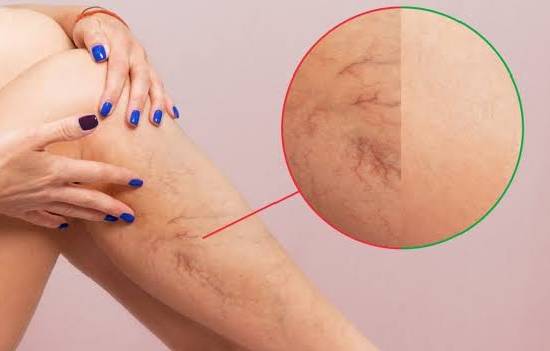
Varicose veins are enlarged, twisted veins that develop when the valves inside the veins become weak or damaged, causing blood to pool. They most commonly affect the legs and can lead to aching pain, heaviness, swelling, itching, and visible bulging veins. Although often considered a cosmetic concern, untreated varicose veins can progress to skin changes, ulcers, or bleeding. Early diagnosis and minimally invasive treatments can effectively relieve symptoms and improve quality of life.
Risk factors for varicose veins include:
- Family history of varicose veins
- Increasing age
- Pregnancy
- Obesity
- Prolonged standing or sitting
- Female gender
- Lack of regular physical activity
- Previous deep vein thrombosis (DVT)
Common symptoms of varicose veins include:
- Visible bulging, twisted veins
- Aching or throbbing leg pain
- Heaviness or tiredness in the legs
- Swelling around the ankles
- Itching over the affected veins
- Night cramps
- Skin discoloration or ulcers in advanced cases
Deep Vein Thrombosis (DVT)
Deep vein thrombosis is a condition where a blood clot forms inside one of the deep veins, most commonly in the leg. It can cause sudden swelling, pain, redness, and warmth in the affected limb. DVT is a serious condition because the clot can dislodge and travel to the lungs, causing a pulmonary embolism.
Risk factors for DVT include:
- Prolonged bed rest or immobility
- Long-distance travel
- Recent surgery or injury
- Cancer or cancer treatment
- Pregnancy
- Clotting disorders
- Obesity
- Oral contraceptive use
Common symptoms of DVT include:
- Sudden swelling of one leg or arm
- Pain or tenderness in the leg
- Warmth or redness over the affected area
- Heaviness in the limb
- Skin discoloration
Post-Thrombotic Syndrome (PTS)
Post-thrombotic syndrome is a long-term complication of DVT where the damaged veins fail to function properly even after the clot is treated. This results in chronic venous insufficiency with persistent symptoms.
Symptoms of post-thrombotic syndrome include:
- Chronic leg swelling
- Heaviness and aching in the leg
- Skin thickening and darkening
- Varicose veins
- Venous skin ulcers that are difficult to heal
Ilio-Femoral Venous Obstruction
The iliac and femoral veins are major deep veins that carry blood from the legs back to the heart. When these large veins become blocked or compressed, it can cause significant swelling and heaviness in the entire leg.
Common causes include:
- Previous DVT and scarring
- May-Thurner Syndrome (compression of left iliac vein by the right iliac artery)
- External compression by tumors or masses
- Venous fibrosis or scarring
May-Thurner Syndrome (Iliac Vein Compression Syndrome)
May-Thurner Syndrome is an anatomical condition where the right iliac artery compresses the left iliac vein, causing reduced venous drainage from the left leg. This can lead to DVT, chronic swelling, and venous hypertension in the left leg.
It is often seen in:
- Young to middle-aged women
- Patients with unexplained left leg DVT
- Patients with persistent left leg swelling despite treatment
Inferior Vena Cava (IVC) Obstruction
The inferior vena cava is the largest vein in the body that carries blood from the lower body to the heart. IVC obstruction or narrowing can cause bilateral leg swelling, abdominal discomfort, and significant venous hypertension.
Superior Vena Cava (SVC) Syndrome
The superior vena cava carries blood from the upper body to the heart. When it becomes blocked — commonly due to cancer, blood clots, or fibrous bands — it causes swelling of the face, neck, and arms along with shortness of breath.
Symptoms of SVC syndrome include:
- Swelling of the face and neck
- Puffiness around the eyes
- Swelling of the arms
- Difficulty breathing
- Prominent veins on the chest
Chronic Venous Insufficiency
Chronic venous insufficiency occurs when the valves inside the veins stop working properly, causing blood to pool in the legs instead of flowing back to the heart.
Common symptoms include:
- Leg swelling, especially after standing
- Aching, cramping, or heaviness
- Itching or burning sensation
- Skin changes such as darkening or thickening
- Non-healing venous leg ulcers
Deep Venous Intervention Procedures Offered
Dr. Suraj Bhame performs a comprehensive range of deep venous interventions using state-of-the-art image-guided techniques. Treatment is individualized based on the type, severity, and duration of venous disease.
1. Endovenous Laser Ablation (EVLA)/ Radiofrequency Ablation (RFA)
Endovenous Ablation is a minimally invasive procedure used to treat varicose veins by sealing the affected vein with heat energy. A thin fiber is inserted into the diseased vein under ultrasound guidance, and controlled heat closes the vein, allowing blood to reroute through healthy veins. The procedure is performed under local anaesthesia with minimal discomfort and no surgical incisions.
This is particularly effective for:
- Great saphenous vein (GSV) reflux
- Small saphenous vein (SSV) reflux
- Symptomatic varicose veins
- Leg swelling, pain, and heaviness
- Venous ulcers caused by chronic venous insufficiency
Advantages include:
- No stitches or major incisions
- Quick recovery with same-day discharge
- Excellent long-term success rates
- Minimal pain and scarring
- Rapid relief from symptoms
2. VenaSeal Therapy
VenaSeal is an advanced, non-thermal, non-tumescent treatment for varicose veins that uses a medical adhesive to permanently seal the diseased vein. A small catheter is placed into the vein under ultrasound guidance, and the adhesive is delivered to close the vein. The treated vein is gradually absorbed by the body while blood is naturally redirected through healthy veins.
This is particularly effective for:
- Great saphenous vein (GSV) reflux
- Small saphenous vein (SSV) reflux
- Patients seeking a needle-free treatment (except for catheter access)
- Patients wishing to avoid heat-based procedures
- Individuals looking for faster return to daily activities
Advantages of VenaSeal include:
- No heat or thermal injury
- No tumescent anaesthesia required
- Minimal discomfort during and after treatment
- No routine compression stockings in most patients
- Immediate return to normal activities with excellent cosmetic results
3. Catheter-Directed Thrombolysis (CDT)
Catheter-directed thrombolysis is a procedure used to dissolve blood clots in deep veins. A thin catheter is placed directly inside the clot, and clot-dissolving medication is infused over several hours to break down the clot and restore venous flow.
This is particularly effective for:
- Acute DVT of the leg
- Axillary and subclavian vein DVT (upper limb DVT)
- Ilio-femoral DVT causing significant swelling
- Prevention of post-thrombotic syndrome
Advantages of CDT over standard anticoagulation alone:
- Faster clot removal
- Better preservation of venous valves
- Reduced risk of post-thrombotic syndrome
- Relief from severe symptoms more quickly
4. Pharmacomechanical Thrombolysis (PMCT)
This advanced technique combines mechanical disruption of the clot with simultaneous infusion of clot-dissolving medication. It allows faster and more complete clot removal compared to catheter-directed thrombolysis alone, and the procedure is usually completed in a single session.
Benefits include:
- Single-session procedure in many cases
- Shorter treatment time
- Lower dose of clot-dissolving medicine
- Effective for large or extensive clots
5. Venous Angioplasty and Stenting
When deep veins are narrowed due to scarring, compression, or structural abnormalities, balloon angioplasty is used to open the narrowed segment. In many cases, a venous stent is then placed to keep the vein open permanently.
This is the standard treatment for:
- May-Thurner Syndrome
- Post-thrombotic venous stenosis
- Iliac vein compression
- IVC narrowing
The procedure involves:
- Local anesthesia
- Access through a small puncture in the groin or behind the knee
- Balloon dilation of the narrowed vein
- Stent placement to maintain venous patency
6. IVC Filter Placement and Retrieval
An IVC filter is a small device placed inside the inferior vena cava to capture blood clots before they travel to the lungs. It is recommended in patients who:
- Have DVT and cannot receive blood thinners
- Are at very high risk of pulmonary embolism
- Are undergoing major surgery with high clot risk
Dr. Suraj Bhame also performs IVC filter retrieval in patients who no longer need the filter or when the filter has been in place long enough that it should be removed.
7. Venous Thrombectomy
In selected cases, mechanical devices are used to physically remove a large clot from a blocked deep vein. This may be done as a standalone procedure or combined with thrombolysis for more complete clot removal.
8. SVC Stenting for Superior Vena Cava Syndrome
In patients with SVC syndrome, a metallic stent is placed inside the narrowed or blocked superior vena cava to rapidly relieve facial and upper limb swelling and improve venous drainage.
9. Venoplasty for Dialysis-Related Venous Stenosis
Patients on dialysis may develop narrowing of the central veins due to repeated catheter use. Balloon venoplasty can open these narrowed segments and help maintain the access site for dialysis.
10. Intravascular Ultrasound (IVUS) Guided Venous Intervention
Intravascular ultrasound is a technique used from inside the blood vessel to accurately assess the degree of venous narrowing and guide stent placement precisely. It helps in achieving better outcomes compared to fluoroscopy guidance alone.
Benefits of IVUS guidance:
- More accurate assessment of vein diameter
- Better stent sizing and positioning
- Improved procedural outcomes3
Benefits of Minimally Invasive Deep Venous Treatment
Minimally invasive venous interventions offer significant advantages over traditional surgical approaches, especially for deep venous disease that is not easily accessible by conventional surgery.
Key benefits include:
- Small puncture — no large surgical incision
- Performed under local anesthesia in most cases
- Shorter hospital stay
- Faster recovery and return to daily activities
- Less pain after the procedure
- Reduced risk of infection and surgical complications
- Effective relief from chronic symptoms
- Helps prevent pulmonary embolism
- Reduces risk of post-thrombotic syndrome
- Limb and organ function preservation
Symptoms You Should Not Ignore
Many venous conditions start with subtle symptoms that are often dismissed or attributed to other causes. Recognizing these early signs and seeking timely evaluation can prevent progression to serious complications.
Consult Dr. Suraj Bhame if you experience:
- Sudden swelling of one or both legs
- Persistent leg swelling that does not improve with rest
- Pain, heaviness, or aching in the leg
- Red or discolored skin over the leg
- Warmth in a swollen area
- Non-healing skin ulcers near the ankle
- Skin darkening or thickening in the legs
- Shortness of breath with leg swelling
- Swelling of the face, neck, or arms
- Prominent veins appearing on the chest or abdomen
What to Expect During the Procedure
Deep venous interventions are carefully planned after a thorough evaluation of the patient’s condition. Dr. Suraj Bhame takes a detailed history, performs a clinical examination, and reviews all relevant imaging before recommending treatment.
Before the procedure:
- Detailed consultation and clinical examination
- Duplex Doppler ultrasound to evaluate veins
- CT venography or MR venography if required
- Blood tests including coagulation profile
- Review and adjustment of blood-thinning medications
- Pre-procedure fasting instructions
During the procedure:
- Performed in a fully equipped interventional radiology suite
- Local anesthesia with mild sedation in most cases
- A small puncture is made in the groin, behind the knee, or in the neck
- Catheter is guided to the affected vein under imaging
- Treatment is carried out using balloon, stent, clot-dissolving agents, or mechanical devices
- Duration of the procedure varies from 1 to 3 hours depending on the type of intervention
After the procedure:
- Close monitoring of the treated vein using Doppler ultrasound
- Blood-thinning medications are continued as prescribed
- Most patients are mobilized early and discharged within 1 to 3 days
- Compression stockings are advised in many cases
- Follow-up appointments to monitor recovery and treatment outcomes
- Long-term anticoagulation may be recommended depending on the underlying cause
Why Choose Dr. Suraj Bhame for Vein Care in Pune?
Deep venous disease requires careful diagnosis, specialized imaging expertise, and technical skill in endovascular procedures. Dr. Suraj Bhame brings together these qualities to provide accurate diagnosis and effective treatment for complex venous conditions in Pune.
Patients benefit from a structured evaluation process where each case is assessed individually, and the most appropriate and minimally invasive option is recommended. Dr. Bhame works closely with hematologists, vascular surgeons, oncologists, and other specialists to ensure comprehensive care for every patient.
What sets Dr. Suraj Bhame apart:
- Expertise in complex deep venous interventions
- Experience with May-Thurner Syndrome and ilio-femoral venous disease
- Skilled in IVUS-guided stenting for precise outcomes
- Comprehensive DVT management including thrombolysis and thrombectomy
- Access to modern interventional radiology infrastructure in Pune
- Clear communication and patient education
- Coordinated multidisciplinary care
- Dedicated follow-up and long-term vein health management
Frequently Asked Questions
Varicose veins are enlarged, twisted surface veins that are visible under the skin, usually caused by valve failure in superficial veins. Deep vein thrombosis is a blood clot forming in a deep vein, usually in the leg, which cannot be seen from the outside. Both conditions can cause leg swelling and pain but are different in nature and require different treatments.
Yes, DVT can be dangerous if the clot breaks off and travels to the lungs, causing pulmonary embolism, which can be life-threatening. Prompt evaluation and treatment are important.
Yes. Most DVT cases are treated with blood-thinning medications. In selected patients with large clots or severe symptoms, minimally invasive catheter-based procedures like thrombolysis or thrombectomy may be recommended to remove the clot more effectively.
Recovery depends on the type of procedure. Many patients are discharged within 1 to 3 days and can resume light activities within a week. Blood-thinning medications are usually continued for a period after the procedure.
In most cases, yes. Blood-thinning medications are prescribed to prevent re-clotting. The duration of treatment depends on the underlying cause of the clot and individual risk factors.
May-Thurner Syndrome is a condition where the left iliac vein is compressed by the overlying right iliac artery, causing reduced blood flow from the left leg. It is treated with balloon venoplasty and stent placement to keep the vein open.
IVC filters can be permanent or retrievable. Retrievable filters are removed once the risk period is over. Dr. Suraj Bhame performs both IVC filter insertion and retrieval procedures.
Book Your Consultation for Vein Care in Pune
If you are experiencing leg swelling, pain, non-healing wounds, or have been diagnosed with DVT or any venous condition, early evaluation is essential. Delayed treatment can lead to long-term complications that are more difficult to manage.
Dr. Suraj Bhame and his team are dedicated to providing expert, compassionate, and advanced venous care in Pune. Whether you need a second opinion or are looking for the most effective treatment option, a consultation can help you understand your condition and the best way forward.
Dr. Suraj Bhame
vascular and Interventional Radiologist – Pune
Patient Testimonials
Innovations That Move You Forward